The 4 forces acting on a weight shift control (WSC) aircraft in flight are lift, thrust, drag, and gravity. Of these gravity will always win unless energy is expended. In WSC flex wing aircraft and ultralight trikes students always seem to have a problem with this concept. When landing, the control bar is pulled in to increase energy and power reduced beginning the decent and increasing airspeed. When it comes time to round out or flare students have a tendency to not only allow the control bar to return to trim but push out rapidly. This results in ballooning where the aircraft rises and rapidly losses energy (airspeed) and can result in a stall while the aircraft is still a foot or two off the ground. In serious cases of ballooning the aircraft stalls higher and results in a bounced landing if your lucky, something more expensive if your not. Once ballooning starts the student will try to counter by pulling in. This makes the problem worse since the aircraft is now slightly nose down and rapidly approaching the ground. So the student pushes out again, back and forth like sawing wood, a nightmare for the instructor who is watching their life flash before their eyes and trying to correct the problem. The solution to the problem - sit back relax and realize that Gravity Always Wins.
First abort the landing and go around, allowing the student to demonstrate good aeronautical decision making skills (in other words please don’t slam me into the ground). Then try again, If when rounding out or flaring the power is at idle and control bar is allowed to return to trim, the aircraft will have the correct attitude and will eventually settle on its own. Obviously, this applies to calm conditions without cross winds but that’s the best training air and your not trying to land on a postage stamp, right?
Another useful tool for correcting problems with either timing or altitude when rounding out is the low pass. If the student can fly the length of the runway at 1 foot then they got it. If not then more practice.
Thursday
The Art Race Hurtle 5- The Aftermath
Well time past and I was pursuing other projects. I had gotten myself and the aircraft back to the Sky Gypsies complex at Amigos del Cielo Airpark but I had heard nothing from Clare recently, I knew the show was finished and cut so I decided to check the web for the status of the show. To my amazement the VROOM network and Gallery HD was closing down. Bummer, all that work and the show was not going to air????? Well I thought "I tried".
But good news, another network picked up the show. I found that Treasure HD picked up the Art Race and is airing it now. Although it has already started, anyone with a TV which receives this station, please watch and report back here.
But good news, another network picked up the show. I found that Treasure HD picked up the Art Race and is airing it now. Although it has already started, anyone with a TV which receives this station, please watch and report back here.
Wednesday
The Art Race Hurdle 4 - The Flight
I wanted to take off at sunrise and asked that Ben arrive before sunrise so we could finish any last minute preparations and preflight. Clare and the film crew assured me they would arrive early on Monday for the flight to Columbus New Mexico. I had an open invitation at the First Aero Squadron Airpark north of Columbus and had tried calling my contact their but was unable to reach anyone. So we were going to fly in unannounced, no problem. I spent Sunday evening prepping the aircraft for the flight, making sure everything was in order paying close attention to the weather, it looked good. Monday morning and I’m up well before dawn, cup of coffee in hand standing in the open hanger. No Ben, so I wait. Finally at 7:00 AM well after sunrise the car with Ben appears. "The crew would like a little more footage and want to follow our route and film from the moving vehicle". I said "ok" there was a place in the next valley that would work for some traveling shots. I explained our route, it was along highway 9 from the Sky Gypsies complex at Amigos del Cielo airpark to Columbus. I gave directions on how to get on highway 9 (go to the north end of the airpark and turn right then straight for 90 miles).
They left and Ben and I finished gearing up and we started out. I took off, climbed to 500’ intersected highway 9 and turned east. Neither of us could see the film crew’s vehicle. We Flew on hoping to find them somewhere, no luck, they missed the turn onto highway 9. Since it was a clam morning I turned the controls over to Ben and let him fly the aircraft while I watched the scenery. The air was perfect a calm clear morning. There were winds at altitude but I figured we would be below them the whole trip. We flew along passing the occasional boarder patrol vehicle or outpost and waved. As we came within sight of Columbus we were hit with a wall of wind. A nasty cross wind from the north had descended to our altitude so I dropped down lower and lower trying to get out of the winds. This was turning into an Aerotrekking adventure trying to stay out of the winds but we were running out of sky and I did not want to be anywhere close to the ground yet in these winds. So I advised Ben to just hang on it was only 10 minutes or so to the First Aero Squadron Airpark. I added power and pulled in on the bar to increase speed and headed to Columbus. Once arriving I flew on the south side around the town and up the east side to the Airpark. Of course the runways were east/west affairs meaning we would have the cross wind for landing. It was blowing 15-20 all the way down, I lined up north of the runway and started reducing power pulling the bar all the way back, I wanted as much energy as possible for landing. I told Ben the wing would be a handful once the wheels touched down so would he help hold the wing level once we touched down. He agreed, I think he wanted to be back on the ground as quickly as possible. So down we went, the cross wind blowing us sideways over the runway as I got into ground effect. I touched down and we both held onto the wing. I let us roll to a stop and began looking for somebody but everything was buttoned up for the winds. We taxied to the road running between the 2 runways and turned down wind taking away a lot of the struggle with the wing. About that time one of the local residents came rolling up in his truck to say hi, “you flew in in this?” Yea, no choice I wasn’t turning around. We got the aircraft into the lee side of a hanger and started waiting for the film crew to arrive. Ben started explaining the Art Race and what he was doing. About that time the film crew showed up and there were introductions all around. First Aero Squardon Airpark is a great place, everyone fly’s and one guy creates aerial sculpture, mobiles and huge things that rotate in the wind. Needless to say all the sculpture was in motion. Ben quickly got a ride into town and we said goodbye. I was tired. Clare thanked me and said she would let me know the airing dates of the show.
Next Hurtle 5 - The Aftermath
They left and Ben and I finished gearing up and we started out. I took off, climbed to 500’ intersected highway 9 and turned east. Neither of us could see the film crew’s vehicle. We Flew on hoping to find them somewhere, no luck, they missed the turn onto highway 9. Since it was a clam morning I turned the controls over to Ben and let him fly the aircraft while I watched the scenery. The air was perfect a calm clear morning. There were winds at altitude but I figured we would be below them the whole trip. We flew along passing the occasional boarder patrol vehicle or outpost and waved. As we came within sight of Columbus we were hit with a wall of wind. A nasty cross wind from the north had descended to our altitude so I dropped down lower and lower trying to get out of the winds. This was turning into an Aerotrekking adventure trying to stay out of the winds but we were running out of sky and I did not want to be anywhere close to the ground yet in these winds. So I advised Ben to just hang on it was only 10 minutes or so to the First Aero Squadron Airpark. I added power and pulled in on the bar to increase speed and headed to Columbus. Once arriving I flew on the south side around the town and up the east side to the Airpark. Of course the runways were east/west affairs meaning we would have the cross wind for landing. It was blowing 15-20 all the way down, I lined up north of the runway and started reducing power pulling the bar all the way back, I wanted as much energy as possible for landing. I told Ben the wing would be a handful once the wheels touched down so would he help hold the wing level once we touched down. He agreed, I think he wanted to be back on the ground as quickly as possible. So down we went, the cross wind blowing us sideways over the runway as I got into ground effect. I touched down and we both held onto the wing. I let us roll to a stop and began looking for somebody but everything was buttoned up for the winds. We taxied to the road running between the 2 runways and turned down wind taking away a lot of the struggle with the wing. About that time one of the local residents came rolling up in his truck to say hi, “you flew in in this?” Yea, no choice I wasn’t turning around. We got the aircraft into the lee side of a hanger and started waiting for the film crew to arrive. Ben started explaining the Art Race and what he was doing. About that time the film crew showed up and there were introductions all around. First Aero Squardon Airpark is a great place, everyone fly’s and one guy creates aerial sculpture, mobiles and huge things that rotate in the wind. Needless to say all the sculpture was in motion. Ben quickly got a ride into town and we said goodbye. I was tired. Clare thanked me and said she would let me know the airing dates of the show.
Next Hurtle 5 - The Aftermath
Tuesday
The Art Race, Hurdle 3 - The Trade.

It was negotiation time and Ben questioned me about creating some sort of artwork in the sky since we spend a lot of time flying. I replied that while that was an interesting idea, how about something on the ground only visible from the sky? Since we spend our time flying around looking at the ground, something only visible from an aircraft would be really neat. He agreed and started getting excited. It was decided that he would create a geoglyph of the Sky Gypsy wings in the desert. By clearing the surface rock and ground cover the underlying surface, which is a lighter color, would show up when viewed from above. I got out a rake and broom and passed them over. Ben chose a spot of empty desert along the runway and got to work. It took him and the film crew from before noon to about 5 pm to clear 100’ high Sky Gypsy wings in the desert. As you can see from the photograph they looked great.
Next - The Flight
The Art Race - The 2nd Hurtle - Who Runs The Show?
So the next morning the film crew arrives with Ben who had found a place to stay in Portal. We did all the setups and filmed like it was the day of the flight. Then we went flying. They wanted to set up on the runway to get some flying shots and the suggestions started. I explained that when I turn the key I’m responsible and pilot in command so I make the decisions. Ooooppps, this initially did not go over to well, but when I explained about some of the other directors who had filmed here and what some of their requests had been then the problems associated with complying they began to get the picture, directors want to kill pilots. So I explained what I could do for them, I could place the aircraft in front of their camera in a number of different ways that would look cool from their perspective but I would always have full control and not put anyone at risk. It was a polite way of saying "yes I want to make your vision a reality but I would like to live through the experience please". I kept repeating, “if we do this right everybody lives and you get the shots you want, we do this wrong and everybody dies, the FAA becomes involved, there will be gnashing of teeth, then ashes and sack clothes for everyone left alive“. They asked where they could set up for filming and we choose several spots where they could get cool shots and everyone would be safe, second hurtle passed.
Ben did well and adapted quickly and soon he was flying from the backseat using the instructors bars. No cross controlling or over controlling he did quite well. He could hold straight and level flight for several minutes. I flew us past the camera along the runway in a series of low passes creating a number of different poses with us and the aircraft. When we landed after an hour of flying everyone was happy. The camera guy got what he wanted, Ben got a flight lesson, I was safe the whole time, and finally I brought the artist back. I’m sure Clare was relieved.
Next - The Trade
Ben did well and adapted quickly and soon he was flying from the backseat using the instructors bars. No cross controlling or over controlling he did quite well. He could hold straight and level flight for several minutes. I flew us past the camera along the runway in a series of low passes creating a number of different poses with us and the aircraft. When we landed after an hour of flying everyone was happy. The camera guy got what he wanted, Ben got a flight lesson, I was safe the whole time, and finally I brought the artist back. I’m sure Clare was relieved.
Next - The Trade
Hard Work Does Pay Off… eventually….I think….maybe. Weight Shift Aircraft in The Art Race
We’ve done our share of television and filming here and one thing is consistent, directors want to kill pilots…. They don’t have an understanding of aviation or what is safe in an aircraft. They politely ask over and over “can you do this please” meaning fly straight at that cliff through the rotors then at the last moment pull up and climb at over 2000’ minute and clear the top of the cliff by 2 feet. Of course what they think will look cool and what really looks cool are 2 different things. It was with that in mind that one day a fellow came into the hanger where I was working, he introduced himself as Ben Sargent an artist from New York. Behind him several others were approaching, one Clare Bradbury turned out to be the producer and with her were a sound and camera guy. Ben was part of the Art Race being filmed by Illuminations media out of the UK. He wanted to know if I was willing to trade a flight carrying him on his eastward trek for some artwork? I replied that I was pretty sure we could work something out. So I asked “is the show sold?” and Clare relied yes it was sold to the VROOM cable network and would appear on their channel Gallery HD. Great, so down to business. Their idea was that I would fly Ben to some point east helping him cross the country and he would create some artwork in trade. They wanted to show up on the day of the flight and film and follow us east. Well, mixing filming and the actual flight was not a good idea. To many variables and things that can go wrong so I said no it would be better if all the filming was done on one day, then the day of the flight they just drop Ben off and I ferry him to Columbus 90 miles east. I explained that we needed at least 1 introductory lesson to familiarize him with weight shift control aircraft. In return I would strap on a wing mount camera and collect some footage they could include. They agreed, first hurdle past.
Next - Who Runs The Show?
Next - Who Runs The Show?
Monday
Where to place the N number
Previously, if you owned a WSC aircraft without a fuselage, a stick trike, and were preparing for an airworthiness inspection by either the FAA or a designated airworthiness representative (DAR) you ran into a problem - where to place the N numbers? On a trike without any fairing there was no place to put the 3" registration numbers horizontally as required by the FARs. To get around the problem required a justification, in writing, to the DAR. This happened here with 2 aircraft that went though the registration process. To make these aircraft acceptable to the DAR required pouring through the regulations and writing a coherent justification asking for a variance. It was granted but all that paperwork was passed on to the FAA.
Now the problem has been fixed. FAR 45.27 specifically addresses where the registration markings on a weight shift control aircraft should be placed. 45.27 (e) states: “Powered parachutes and weight-shift-control aircraft. Each operator of a powered parachute or a weight-shift-control aircraft must display the marks required by §§45.23 and 45.29(b)(2) of this part. The marks must be displayed in two diametrically opposite positions on the fuselage, a structural member, or a component of the aircraft and must be visible from the side of the aircraft.”
So instead of horizontal marks no specification is made, so marks can be horizontal or vertical. This allows the rear landing strut or the mast as a place for N numbers on stick trikes. As per FAR 45.29 the letters must be a minimum of 3” high and 2” wide but these will fit vertically on the main rear strut. Life would have been so much easier if this had been in place when 9 aircraft were taken through the system.
Now the problem has been fixed. FAR 45.27 specifically addresses where the registration markings on a weight shift control aircraft should be placed. 45.27 (e) states: “Powered parachutes and weight-shift-control aircraft. Each operator of a powered parachute or a weight-shift-control aircraft must display the marks required by §§45.23 and 45.29(b)(2) of this part. The marks must be displayed in two diametrically opposite positions on the fuselage, a structural member, or a component of the aircraft and must be visible from the side of the aircraft.”
So instead of horizontal marks no specification is made, so marks can be horizontal or vertical. This allows the rear landing strut or the mast as a place for N numbers on stick trikes. As per FAR 45.29 the letters must be a minimum of 3” high and 2” wide but these will fit vertically on the main rear strut. Life would have been so much easier if this had been in place when 9 aircraft were taken through the system.
Digital Airport Facilities Directory (AFD)
Airport facilities directories are useful tools for flight planning and every pilot has a copy. The problem with these little green books is they have a very short life span expiring about every 3 months. If you are not close to a pilot shop, like the Sky Gypsies, it is difficult to keep an current version of the AFD. Well the AFD is now online courtesy of the FAA.
A current AFD is especially important when testing since the designated pilot examiner (DPE) will require the applicant (us) to have a current copy for the ground portion of the test. But thanks to the FAA that will not be a problem, just go online and either download the latest version for the test or connect to the site during the oral. Demonstrating the ability to access relevant information on the FAA’s website also demonstrates good aeronautical decision making skills, something DPEs always like to see.
A current AFD is especially important when testing since the designated pilot examiner (DPE) will require the applicant (us) to have a current copy for the ground portion of the test. But thanks to the FAA that will not be a problem, just go online and either download the latest version for the test or connect to the site during the oral. Demonstrating the ability to access relevant information on the FAA’s website also demonstrates good aeronautical decision making skills, something DPEs always like to see.
Sunday
Pictures of the Sky Gypsies
The Sky Gypsies are perhaps best known for the groups founder, but photographs of other Sky Gypsies crop up from time to time in different places. Here is a page from one of the search engines showing the “real” BAlvarius. The search engine did something funny in processing the information from the Portal Café’s YouTube channel resulting in this link.
Saturday
Trouble With The Neighbors
Neighbors giving you problems, nowhere to turn? Mount a canon on your trike or flex wing microlight. Part way down this page of WWI aviation photographs is one of a cannon mounted in place of the engine on an aircraft.
I suspect the recoil from firing might induce some pitch stability problems though.
Ohh and don’t forget to update your weight and balance form after you finish mounting your canon. I don’t know whether this is considered a major modification by the FAA. Will have to get some advice on that.
Hat tip The Vintage Aviator via Trike Pilot Social
I suspect the recoil from firing might induce some pitch stability problems though.
Ohh and don’t forget to update your weight and balance form after you finish mounting your canon. I don’t know whether this is considered a major modification by the FAA. Will have to get some advice on that.
Hat tip The Vintage Aviator via Trike Pilot Social
LED Landing Light
Here is an evaluation of a 2700 lumen 100 Watt LED light . With the low power required by LEDs this might make a good aircraft landing light, much better than the fog lights used by many. Although the tested LED costs $500.00 a less expensive version is available for $118.00 on this page.
Friday
The Government is out to get us, the Death of Aerotrekking?
Those who have never flown a weight shift control light sport aircraft or ultralight trike seem to always have an opinion, frequently negative. For some reason if it does not have an enclosed cabin, a tail, weigh several thousand pounds, and cost hundreds to thousands of dollars/hr to operate it must be dangerous. But geesh, I didn’t know the Air Force had decided to do something about it. This call for proposals from the Air Force is looking for a “non-lethal weapon utilizing net launching technology” to take out utralight aircraft/paratroppers. This Counter Ultra Light Aircraft/Paratrooper System (CULAPS) system will be based on a ground launched lightweight net which will enclose the aircraft and spoil the lift causing it to gently come down. They would like it to be light weight (man/vehicle held) and have a vertical range greater than 500 ft. Oh and it should be automated for remote operation so sensors can set it off.
Somebody watched this video on how to catch a bird and decided it would work for aircraft.
Hat tip to Skydog Skyblog
Somebody watched this video on how to catch a bird and decided it would work for aircraft.
Hat tip to Skydog Skyblog
Sky Gypsy Aerial Photographs
Everyone has at least a passing familiarity with Google Earth. I use it frequently for flight planning since I fly VFR and it is especially useful when planning a video. I can get an idea of how the terrain looks from various altitudes and angles so I know how to position the camera and aircraft during filming for the best effect. Google incorporates submitted photographs into the map and you can find pictures of about everything on the map including naked people photographed from space. I had submitted a number of photographs taken while Aerotrekking and 25 have been accepted for inclusion on the map. All are from local flights and include some of the places around here. You can see the whole collection here or watch them in the sidebar. I have several photographs that are still under review and I plan on adding additional photographs from around the boot heel.
The photograph of the ninth hole at GPGC was taken by Dan Murphy. I just prepped the photo and submitted it. He tells me his course is free but it's $50.00 a ball.
The photograph of the ninth hole at GPGC was taken by Dan Murphy. I just prepped the photo and submitted it. He tells me his course is free but it's $50.00 a ball.
Thursday
Aerial videography from weight shift control (WSC) aircraft
Probably the most important thing I have learned about aerial videography is the importance of relative motion. That is understanding how objects move relative to one another in a scene while flying, then capturing that on video. Just as aerial still photography requires an emphasis on composition, aerial videography requires thinking about composition through time and how all the objects in the frame will look moving relative to one another.
The first step in understanding relative motion is camera placement. The advantage of taking video from WSC aircraft, or any ultralight trike for that matter, is realizing that there are lots of places to mount a camera and the effect you want will dictate the mounting position. If the camera is a passive observer in the scene then stability is required and mounting on the control bar or an element of the wing provides the most stability. If the camera is an active participant in the scene then mounting on carriage or front tube adds some movement during video recording which helps make the viewer part of the action. There are 2 videos where different camera placement was the goal of the exercise.
Learning to Aerotrekk had 10 camera placements and focused on demonstrating a low pass from the pilots perspective.
Personal Protection based on the 1950's Duck and Cover also had 10 camera placements and compares control bar and wing mounting versus carriage mounted views.
The first step in understanding relative motion is camera placement. The advantage of taking video from WSC aircraft, or any ultralight trike for that matter, is realizing that there are lots of places to mount a camera and the effect you want will dictate the mounting position. If the camera is a passive observer in the scene then stability is required and mounting on the control bar or an element of the wing provides the most stability. If the camera is an active participant in the scene then mounting on carriage or front tube adds some movement during video recording which helps make the viewer part of the action. There are 2 videos where different camera placement was the goal of the exercise.
Learning to Aerotrekk had 10 camera placements and focused on demonstrating a low pass from the pilots perspective.
Personal Protection based on the 1950's Duck and Cover also had 10 camera placements and compares control bar and wing mounting versus carriage mounted views.
Wednesday
The Rodeo Roundup
Sun-n-Fun has started and Neil Bunguard is onsite and running the Air Creation booth. Located in Paradise city the Air Creation booth is next to the runway. Stop by and say hi to Neil and Mardella.
Tuesday
Practical Test Standard References
Practical Test Standard References
I have tracked down links to all the references used in creating the PTS. You can find all the information covered in the PTS by following each link to the FAA resource. Download the material and save it on your computer. After reviewing the applicable material you can create answers based on FAA material for every bullet point in the PTS. This allows you to create answers ahead of time for the oral portion of the practical test. If you take your laptop with this material to the test you will be prepared with all the resources you need to answer the Designated Pilot Examiners questions and successfully complete the oral portion of the test.
14 CFR part 43 Maintenance, Preventive, Maintenance, Rebuilding, and Alteration
14 CFR part 61 Certification: Pilots, Flight Instructors, and Ground Instructors
14 CFR part 67 Medical Standards Certification
14 CFR part 71 Designation of class A, B, C, D, and E airspace
14 CFR part 91 General Operating and Flight Rules
AC 00-6 Aviation Weather
AC 00-45 Aviation Weather Services
AC 60-22 Aeronautical Decision Making
AC 60-28 English Language Skill Standards
AC 61-65 Certification: Pilot and Flight Instructors and Ground Instructors
AC 61-67 Stall and Spin Awareness Training
AC 61-84 Role of Preflight Preparation
AC 61-134 General Aviation Controlled Flight Into Terrain Awareness
AC 90-23 Aircraft Wake Turbulence
AC 90-48 Pilots’ Role in Collision Avoidance
AC 90-66 Recommended Standard Traffic Patterns and Practices for Aeronautical Operations At Airports Without Operating Control Towers
AC 91-69 Seaplane Safety for FAR Part 91 Operations
AC 120-51 Crew Resource Management Training
FAA-H-8083-1 Aircraft Weight and Balance Handbook
FAA-H-8083-3 Airplane Flying Handbook
FAA-H-8083-9 Aviation Instructor’s Handbook
FAA-H-8083-13 Glider Flying Handbook
FAA-H-8083-15 Instrument Flying Handbook
FAA-H-8083-23 Seaplane, Skiplane, and Float/Ski Equipped Helicopter Flying Handbook
FAA-H-8083-25 Pilot’s Handbook of Aeronautical Knowledge
AIM Aeronautical Information Manual
AFD Airport/Facility Directory
AFM Aircraft Flight Manual
NOTAMs Notices to Airmen
Other Pilot Operating Handbook/
FAA-Approved Flight Manual
Aeronautical Navigation Charts
Seaplane Supplement
Powered Parachute Bible
Weight Shift Control Aviation Handbook
I have tracked down links to all the references used in creating the PTS. You can find all the information covered in the PTS by following each link to the FAA resource. Download the material and save it on your computer. After reviewing the applicable material you can create answers based on FAA material for every bullet point in the PTS. This allows you to create answers ahead of time for the oral portion of the practical test. If you take your laptop with this material to the test you will be prepared with all the resources you need to answer the Designated Pilot Examiners questions and successfully complete the oral portion of the test.
14 CFR part 43 Maintenance, Preventive, Maintenance, Rebuilding, and Alteration
14 CFR part 61 Certification: Pilots, Flight Instructors, and Ground Instructors
14 CFR part 67 Medical Standards Certification
14 CFR part 71 Designation of class A, B, C, D, and E airspace
14 CFR part 91 General Operating and Flight Rules
AC 00-6 Aviation Weather
AC 00-45 Aviation Weather Services
AC 60-22 Aeronautical Decision Making
AC 60-28 English Language Skill Standards
AC 61-65 Certification: Pilot and Flight Instructors and Ground Instructors
AC 61-67 Stall and Spin Awareness Training
AC 61-84 Role of Preflight Preparation
AC 61-134 General Aviation Controlled Flight Into Terrain Awareness
AC 90-23 Aircraft Wake Turbulence
AC 90-48 Pilots’ Role in Collision Avoidance
AC 90-66 Recommended Standard Traffic Patterns and Practices for Aeronautical Operations At Airports Without Operating Control Towers
AC 91-69 Seaplane Safety for FAR Part 91 Operations
AC 120-51 Crew Resource Management Training
FAA-H-8083-1 Aircraft Weight and Balance Handbook
FAA-H-8083-3 Airplane Flying Handbook
FAA-H-8083-9 Aviation Instructor’s Handbook
FAA-H-8083-13 Glider Flying Handbook
FAA-H-8083-15 Instrument Flying Handbook
FAA-H-8083-23 Seaplane, Skiplane, and Float/Ski Equipped Helicopter Flying Handbook
FAA-H-8083-25 Pilot’s Handbook of Aeronautical Knowledge
AIM Aeronautical Information Manual
AFD Airport/Facility Directory
AFM Aircraft Flight Manual
NOTAMs Notices to Airmen
Other Pilot Operating Handbook/
FAA-Approved Flight Manual
Aeronautical Navigation Charts
Seaplane Supplement
Powered Parachute Bible
Weight Shift Control Aviation Handbook
Free, The Weight Shift Control Flying Handbook.
With the takeover by the FAA everything has become more uniform for weight shift pilots, one organization that oversees training of trike pilots and registration of aircraft. While the merits of this have been debated endlessly one thing is clear - the process moves forward. The Weight-Shift Control Aircraft Flying Handbook has been published by the FAA and is available online from several vendors. Aside from providing standardized information for training and testing, the great thing about this book is you already paid for it. Your tax dollars went to pay the author and you can get as many free copies as your hard drive can hold. That is one of the good things about the FAA, they tell you what you what the rules are (the FARs), they tell you what you are required to do to get a pilot ticket (training requirements), and they give you all the information to accomplish the task. It is all free, just go and get it. It is even possible to complete a light sport CFI with the information the FAA provides. The system is set up to help you pass and get your ticket.
You can find a link to the Weight-Shift Control Flying Handbook under weight shift aviation links in the sidebar or you can just go here.
Leave a comment and let me know what you think about this new training tool.
You can find a link to the Weight-Shift Control Flying Handbook under weight shift aviation links in the sidebar or you can just go here.
Leave a comment and let me know what you think about this new training tool.
Monday
Where are the Sky Gypsies
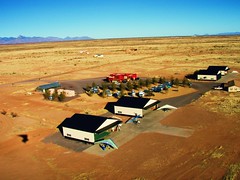
The Sky Gypsies live across the continental US and in Central America, and according to this
Smugglers in trikes
Since I fly within 50 miles of the boarder in the boot heel of New Mexico I have to comment on this recent article Ultralight flights new method to haul drugs from the Arizona Republic and this column . It seems there have been 3 identified incursions into US airspace from Mexico by drug smugglers using weight shift aircraft. All 3 were carrying bales of pot. Does this strike anyone as odd? The payload on a flex wing microlight is about 500-600 lbs. for most 2 seat aircraft. Why would someone try smuggling bales of pot with a 500 lb. payload? The cost benefit ratio is extremely poor for such a common commodity. It would make more sense to try and smuggle something with a higher profit margin rather than a bale of weed.
What is more unusual is that all 3 crashed, in one case killing the pilot and paralyzing the other. In all fairness the third pilot reportedly crashed while trying to drop his load. Clearly he did not watch this video on how to drop a cargo load from Air First Aid. But back to the 2 deaths, one “unidentified pilot clipped a power line in December while being chased by a Customs and Border Protection drone.” Being chased by a drone! Lets see, someone has flown across the boarder and not stopped for customs inspection so they send up the drone to chase them down. As all pilots know flying to close to someone can be hazardous. Trying to pilot a light sport aircraft while being intercepted by an unmanned drone sounds dangerous. John Kemmeries had it right when he said "These aircraft are designed to carry a person, not a payload." I guess it’s time to brush up on my intercept procedures .
What is more unusual is that all 3 crashed, in one case killing the pilot and paralyzing the other. In all fairness the third pilot reportedly crashed while trying to drop his load. Clearly he did not watch this video on how to drop a cargo load from Air First Aid. But back to the 2 deaths, one “unidentified pilot clipped a power line in December while being chased by a Customs and Border Protection drone.” Being chased by a drone! Lets see, someone has flown across the boarder and not stopped for customs inspection so they send up the drone to chase them down. As all pilots know flying to close to someone can be hazardous. Trying to pilot a light sport aircraft while being intercepted by an unmanned drone sounds dangerous. John Kemmeries had it right when he said "These aircraft are designed to carry a person, not a payload." I guess it’s time to brush up on my intercept procedures .
What is Aerotrekking?
MetaGlossary defines aerotrekking as long distance low level flying, following the contours of the earth in open cockpit weight shift aircraft. While nap of the earth flying has been around since the beginning of aviation, it is best known in military aviation circles where pilots fly at extremely low levels to avoid being shot down by the enemy. Here outside of Rodeo in the 1200 square miles of the New Mexican boot heel is the perfect area for low level flying and the military knows this too. It is not uncommon for jets to come screaming down Cave Creek Canyon and out into the valley, much to the chagrin of the local residents. In fact 2 military operations areas cover the north and south parts of the valley
Weight shift pilots have been nap of the earth flying for years, one of the guilty pleasures. The advantage weight shift control aircraft have over fixed wing aircraft is the second energy management system, especially useful in case of engine failure. By pulling in on the control bar the carriage swings forward, the angle of attack is reduced and energy is stored. Of course a higher power setting is required to maintain altitude but if the engine quits the pilot can allow the control bar to return to trim. The excess stored energy is then converted into altitude providing extra time for a landing decision.
Flying low over open terrain is fun but does require a sharp eye for obstacles, equipment that is good condition, and practice. Several videos, Learning to Aerotrek and Learning to Aerotrekk II Open Terrain address learning how to Aerotrekk.
Weight shift pilots have been nap of the earth flying for years, one of the guilty pleasures. The advantage weight shift control aircraft have over fixed wing aircraft is the second energy management system, especially useful in case of engine failure. By pulling in on the control bar the carriage swings forward, the angle of attack is reduced and energy is stored. Of course a higher power setting is required to maintain altitude but if the engine quits the pilot can allow the control bar to return to trim. The excess stored energy is then converted into altitude providing extra time for a landing decision.
Flying low over open terrain is fun but does require a sharp eye for obstacles, equipment that is good condition, and practice. Several videos, Learning to Aerotrek and Learning to Aerotrekk II Open Terrain address learning how to Aerotrekk.
How we do it
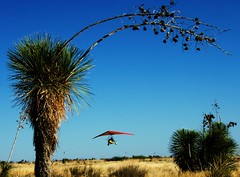
These aircraft come in 2 flavors, the ultralight trike and the FAA regulated light sport aircraft. Ultralight trikes are single seat vehicles that weigh no more than 254 lbs., carry a single person, hold no more than 5 gallons of gas, have a top speed of no more than 55 knots, and a stall speed less than 24 knots. While the light sport aircraft must weigh less than 1320 lbs., have a maximum seating capacity of 2 including the pilot, can not have a maximum speed exceeding 120 knots, a stall speed less than 45 knots, a single reciprocating engine with a ground adjustable prop, fixed landing gear, and a non-pressurized cabin.
What we do

Sky Gypsies fly a unique type of aircraft. Known as flex wing microlights, weight shift control aircraft, WSC aircraft, trikes, or kite wing aircraft, they have no tail or control surfaces and direction is controlled through shifting the pilots weight. We spend time high in the sky, traveling, or aerotrekking.
The FAA defines these aircraft as - “Weight-shift-control aircraft means a powered aircraft with a framed pivoting wing and a fuselage controllable only in pitch and roll by the pilot's ability to change the aircraft's center of gravity with respect to the wing. Flight control of the aircraft depends on the wing's ability to flexibly deform rather than the use of control surfaces.”
Who we are

The Sky Gypsies are a group of pilots who advocate weight shift control light sport aircraft. We come from all different backgrounds but find common ground in a love of aviation and will do almost anything to go flying. We spend most of our time flying in the basin and range region of the boot heel of New Mexico, 1200 square miles of the "open big empty". For more information see this post.
Sky Gypsy photograph by Dawn Kish Photography
Sunday
The History of Sky Gypsies
According to the unencyclopedia flying gypsies (flypsies) or Sky Gypsies have been around since the middle ages. These flying vagabonds used homemade aircraft primarily as a means to escape angry locals or police. This is in contrast to many of today’s Sky Gypsies whose love of aviation exceeds their income. They are easily recognized by their poor dress, shaggy hair, and emaciated look but somehow manage to own at least one aircraft. While the airworthiness of their aircraft may be questioned modern Sky Gypsies are always ready to fly.
Subscribe to:
Posts (Atom)


 Posts
Posts